Value Poly
Medical center website
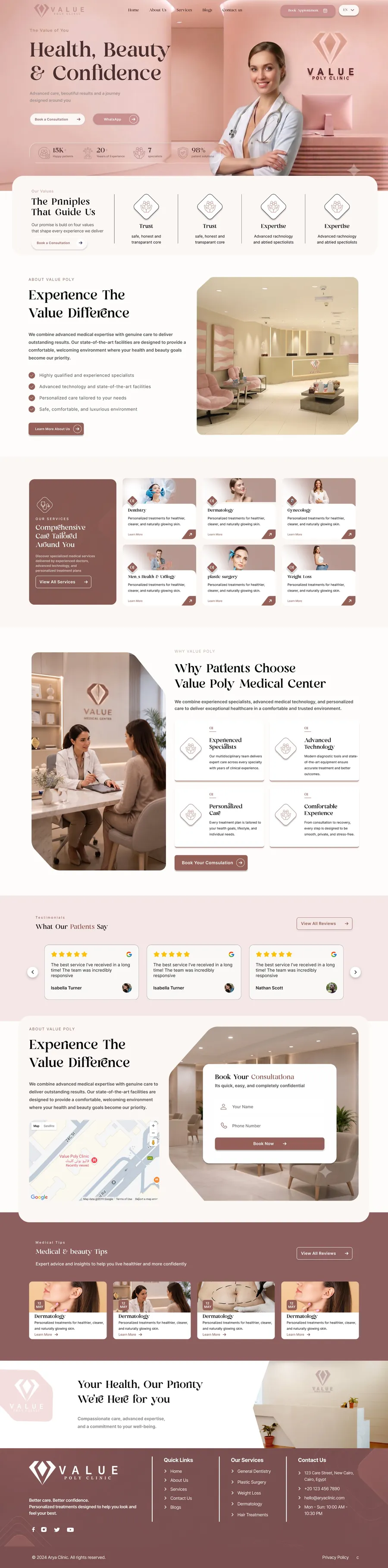
A website for a multi-specialty medical center, organized around its services: a clear way into each specialty, patient reviews, and a booking form that is never far away.
View case studyWeb Developer & UI/UX Designer
I'm Ahmed Aly Ghaly. I take a digital experience from the first flow to the finished build, so nothing gets lost between the design and the code.
And I obsess over the details that nobody notices.
 Ahmed Aly Ghaly
01—05 Selected work
Five sites, five different scopes — some full WordPress builds, some fully specified Figma files for another team — but the UI/UX, the design, and the client conversations were mine throughout.
Medical center website
A website for a multi-specialty medical center, organized around its services: a clear way into each specialty, patient reviews, and a booking form that is never far away.
View case studyBilingual clinic website
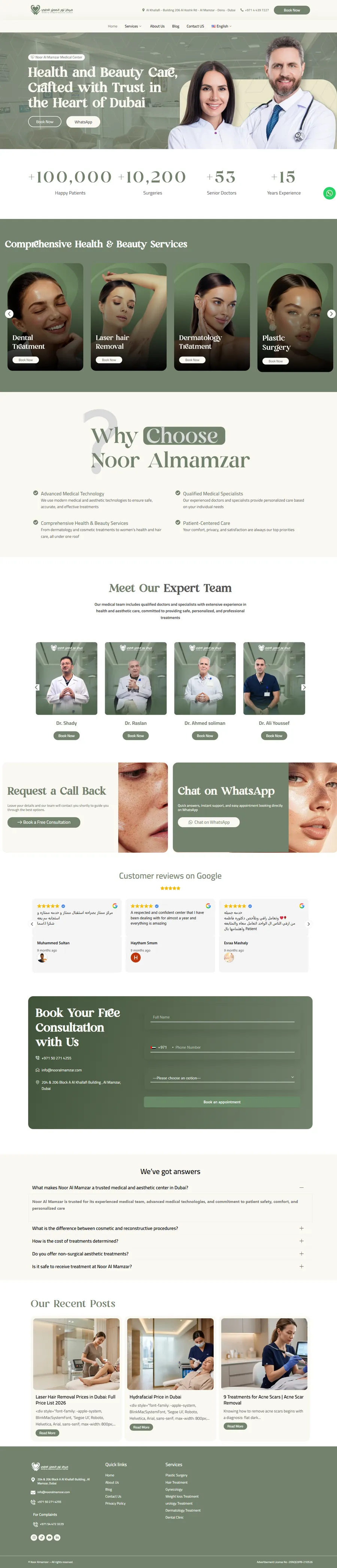
A bilingual Arabic/English medical center site juggling four specialties and two languages in one hero, with a muted sage identity and the trust numbers placed ahead of any service copy.
View case studyInterior design studio website
An interior design studio site spanning three services — interior, exterior, and landscape — each styled distinctly, backed by a 50+ photo property gallery and a client video tour.
View case studyLuxury clinic website
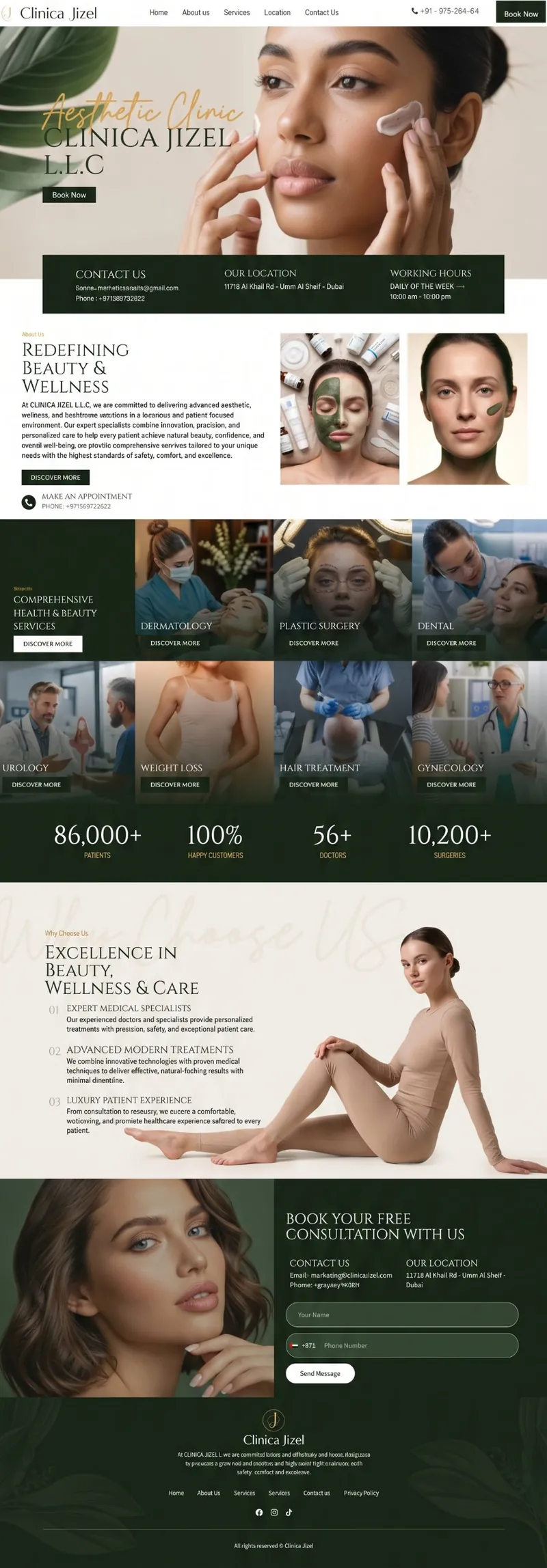
A luxury aesthetic clinic site spanning seven specialties, built around real treatment photography instead of icons, with practical info and booking always close at hand.
View case studyAutomotive garage website
A performance-garage site built to read as technically credible to luxury car owners, leading with a marque row and real facility photos before any service claims.
View case study FIG. 01 — AG / 2026
I design the experience, then build it myself, so the decisions made on the canvas are the ones that reach the browser.
Outside the work I like games where position matters: chess, football, backgammon. They shape how I look at a product: what each part is for, what information people have, and what happens a few moves later.
Four stages, each with one rule I keep coming back to.
Position before pieces.
I start with who's using it, what they're trying to get done, and what a wrong turn costs them. Screens come later.
Roles before components.
Every element gets one job. Hierarchy, flows, and variants are decided as a system, not screen by screen.
The design ships as designed.
Components, tokens, real breakpoints, fast pages. What was decided in Figma survives contact with the browser.
Play the odds, then check the details.
Launch, watch what people actually do, adjust. Then the 8px.
The clean version is simple. The real version is… a little different.
The real version. Press next.
Good design isn't the design that never changed.It's the design that kept getting better because we learned something.
That's design.